
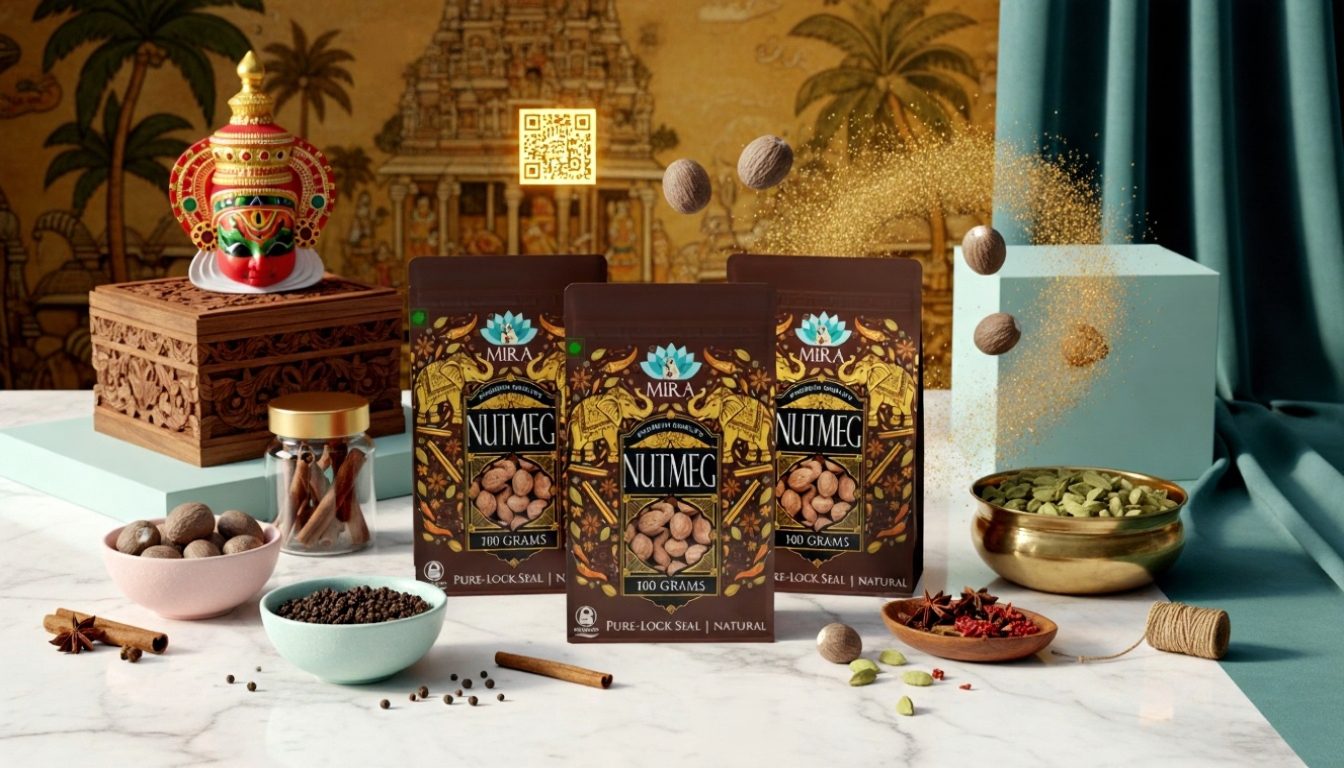
Why Choosing a Reliable Nutmeg Wholesale Supplier Is Critical in 2025
For nutmeg and other Indian spices, decades-long prestige is being tested by a wave of global safety concerns. As an importer, manufacturer, or food-industry buyer, sourcing premium whole spices from India now demands more than just origin — it requires transparency, rigorous testing, and traceability.
This post outlines the current challenges and explains how suppliers committed to “farm-to-fork” quality — such as us at Mira Masala LLP — offer a secure path forward.
From Premium Heritage to Reputation Under Strain
The historical premium of Indian spices
- India has traditionally been regarded as the world’s spice hub — with nutmeg among its precious exports. Whole spices from India carried a reputation for superior aroma, potency, and authentic flavour, making them highly valued by global buyers.
- For decades importers and spice-driven food manufacturers leaned on “Indian origin” as a signal of quality and tradition.
The growing crisis of trust
- Recently, high-profile recalls and bans have shaken confidence in Indian spice exports, including nutmeg and other spices. Le Monde.fr+2Reuters+2
- As a result, many global buyers are reconsidering sourcing strategies — shifting from “origin-first” to “certainty-first.”
What’s Causing the Concern — Contamination, Adulteration, and Market Fallout
Ethylene Oxide (EtO) contamination
- In 2024, several spice products from major Indian brands were flagged for containing residue of ethylene oxide (EtO), a carcinogenic fumigant. Wikipedia+2Le Monde.fr+2
- Regulatory bodies in markets such as Hong Kong and Singapore recalled affected spice blends, triggering further inspections globally. Reuters+2Le Monde.fr+2
- In response, Indian authorities mandated mandatory pre-shipment testing for EtO residues for exports to sensitive markets, and issued new guidelines for exporters. The Economic Times+2The Economic Times+2
Adulteration and low-quality/spurious fillers
- Independent research shows a sizable portion of spices in Indian domestic markets may be adulterated. Spices (including aromatic ones) may be mixed with fillers, non-edible matter, or inferior quality substitutes to increase volume or weight. ResearchGate
- Such practices degrade aroma, flavour and nutritional value — and may introduce health risks. ResearchGate+1
Trade & Regulatory Fallout
- The recent spice safety controversies have led to increased rejections, recalls, and tighter scrutiny in importing countries. Reuters+2Le Monde.fr+2
- For many buyers — especially in EU, US, Australia, and other regulated markets — this means delays, shipment cancellations, reputational risk, and increased compliance costs.
Industry Standards, Regulations & Traceability — Where the Challenges Lie
Fragmented supply chains impair transparency
- Spice supply in India often involves multiple intermediaries: small farms → brokers/traders → processors → exporters. This fragmentation complicates traceability and allows adulteration or unsafe processing to slip in. PWOnly IAS+1
- In many cases, documentation is inconsistent or incomplete; tracking origin, processing, storage and sterilization becomes nearly impossible. Le Monde.fr+1
Regulatory pressures differ by market
- Different countries apply different “maximum residue limits” (MRLs) for chemicals like EtO or pesticide residues. For example, markets like EU are very strict, often disallowing EtO presence altogether. The Economic Times+2ETGovernment.com+2
- Lack of a unified global standard complicates compliance for exporters: what passes in one market may fail in another. The Economic Times+1
Testing and certification gaps
- Though regulations exist, enforcement and testing remain inconsistent — especially among smaller suppliers or informal supply-chain participants. Le Monde.fr+1
- Detection of adulteration or contaminants often requires specialized lab-based tests (e.g. GC-MS, spectroscopy) which many small-scale processors lack. ResearchGate+1
Rise of “Traceability & Trust” — The New Benchmark for Wholesale Nutmeg Suppliers
Why traceability matters more than ever
- For global B2B buyers, traceability from source to shipment is no longer optional — it’s essential for compliance, quality assurance, and brand safety.
- Traceability gives visibility into every step: farm origin, harvest date, processing methods (e.g. fumigation vs steam), storage conditions, lab testing, batch numbers.
What a robust “farm-to-fork” model looks like
A transparent supply-chain model should include:
- Verified farm/estate origin (with geo tags or documentation)
- Controlled processing with non-chemical sterilization (steam or other approved methods) instead of banned fumigants
- Pre-shipment lab testing (residual chemicals, contaminants, microbial load, authenticity checks)
- Batch-wise documentation and certification (lab reports, origin declarations, traceability records)
- Secure, hygienic packaging and transport under controlled conditions
Why such suppliers have competitive advantage
- Consistent compliance with import regulations — reduces risk of shipment rejection or recalls
- Reliability and brand safety — important for manufacturers/food brands who must ensure product integrity for end-consumers
- Trust and long-term partnerships — transparent suppliers become preferred vendors for B2B clients
What’s Being Done — Solutions, Best Practices, and Industry Trends
Regulatory response & export-control measures from India
- In 2024, after global recalls, India’s regulatory authorities issued updated guidelines for exporters, mandating pre-shipment EtO testing for exports to sensitive markets like Hong Kong and Singapore. The Economic Times+2The Economic Times+2
- Periodic inspection of processing units and accredited-lab sample testing has been instituted as part of compliance. The Economic Times+1
Lab-based analysis & modern quality detection methods
- Recent academic and industry reviews highlight non-destructive analytical techniques (spectroscopy, GC-MS, “e-sensing” systems) to detect adulteration, contaminants, fillers or chemical residues in spices — including whole and ground forms. ResearchGate+1
- Technology adoption for spice authentication is gaining ground, improving reliability for export-grade supply chains. ResearchGate
Supply-chain reorganization & more direct sourcing
- Leading exporters are increasingly working directly with farms or contract growers to reduce intermediaries — enabling better oversight over cultivation, harvesting, storage and processing. PWOnly IAS+1
- Full documentation and transparent record-keeping — from farm to final shipment — is becoming a mark of quality suppliers and a prerequisite for buyers targeting regulated markets.
What This Means for Global Buyers Seeking Wholesale Nutmeg
If your business depends on importing nutmeg or other Indian spices, keep these in mind:
- Prioritize suppliers who can provide full traceability: farm origin, processing history, batch-wise lab certificates.
- Avoid suppliers using chemical fumigants like EtO — insist on safe sterilization methods and testing.
- Require lab test reports for chemical, microbial and authenticity checks before purchase.
- Prefer suppliers with direct sourcing from farms or estate-level traceable supply chains, reducing risk of adulteration.
- Always factor in regulatory compliance risk — non-compliant consignments may face border rejections, recalls, or reputational damage.
Working with a transparent and quality-focused partner is no longer just good practice — it is essential for stable access to regulated markets.
Conclusion
The global spice market is undergoing a trust transformation. Long-standing assumptions that “Indian origin = premium spice quality” are no longer sufficient. Regulatory scrutiny, contamination scandals, and adulteration practices have exposed critical vulnerabilities in the spice supply chain.
In this context, reliable wholesale nutmeg suppliers — those who invest in traceability, rigorous testing, hygienic processing, and transparent documentation — stand out as the new benchmark. For importers, food manufacturers, and wholesalers, aligning with such suppliers is not just a choice, but a business necessity.
If you source nutmeg (or other spices) from India, now is the time to demand traceability, insist on lab-tested quality, and choose partners who treat safety and transparency as core values.