
You’ve probably already searched for a bulk spice supplier in India and found dozens of options. But choosing the right one isn’t just about price it’s about avoiding costly mistakes like inconsistent quality or rejected shipments. In this guide, you’ll learn exactly how to identify, evaluate, and work with reliable Indian spice suppliers for long-term success.
Key Takeaways
- Bulk spice suppliers in India provide large quantities of spices to importers, wholesalers, and food brands.
- Supplier selection depends on quality consistency, specifications, and export readiness, not just price.
- Different supplier types include origin traders, aggregators, and export-ready processors.
- Reliable sourcing requires checking moisture levels, grading standards, and packaging quality.
- Export terms like FOB and CIF directly impact total landed cost and logistics responsibility.
- Structured supplier evaluation reduces the risk of shipment rejection and financial loss.
- Long-term partnerships with consistent suppliers improve supply chain stability and margins.
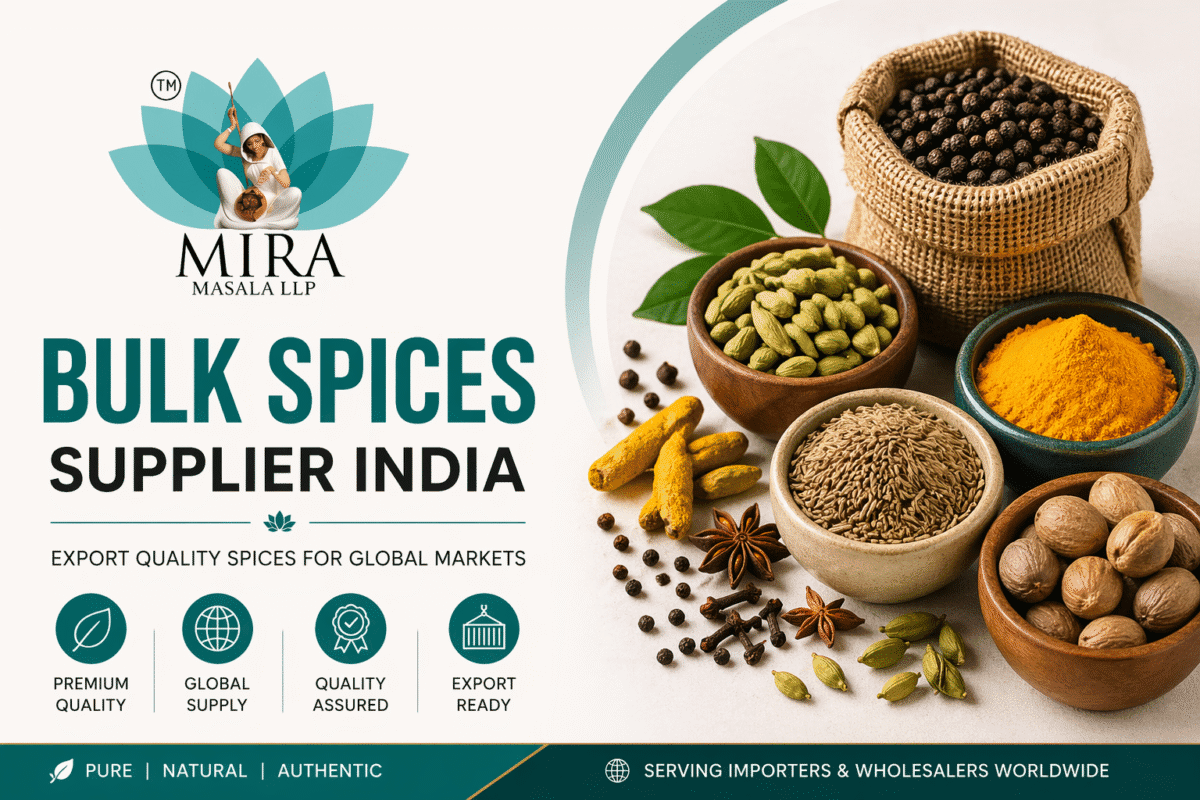
What Is a Bulk Spice Supplier in India?
A bulk spice supplier in India is a business that provides large quantities of spices to importers, wholesalers, and food brands with standardized quality and packaging.
First, these suppliers operate at scale, sourcing directly from origin markets like Kerala, Guntur, and Rajasthan. For example, a supplier may procure black pepper from Kerala farms and process it for export in bulk quantities of 500kg or more.
Second, not all suppliers are the same. Some act as traders, while others manage cleaning, grading, and packaging. This distinction matters because export-ready suppliers reduce your operational risk significantly.
For a deeper understanding of supplier types, refer to [Internal link: “bulk spice supplier India” → homepage].
Why Are Bulk Spice Suppliers Important for Importers?
Bulk spice suppliers are important because they determine product quality, consistency, and overall profitability in your supply chain.
First, inconsistent supply can lead to rejected shipments. According to FAO, over 25% of global spice shipments face quality-related issues — Source: FAO, 2023.
Second, poor sourcing affects your brand reputation. For example, if moisture levels exceed acceptable limits, your entire batch may spoil during transit.
Third, reliable suppliers ensure:
- Consistent grading
- Timely delivery
- Proper export packaging
This is why serious buyers prioritize supplier reliability over price savings.
How to Choose a Reliable Bulk Spice Supplier in India?
Choosing a reliable bulk spice supplier involves evaluating specifications, processing standards, and communication clarity.
Check Product Specifications
First, product specifications define quality. These include:
- Moisture content
- Density (e.g., 550 GL pepper)
- Size grading (e.g., 8mm cardamom)
For example, 550 GL black pepper indicates higher density and better quality.
Evaluate Cleaning & Processing
Second, processing methods determine consistency. Suppliers should offer:
- Machine cleaning
- Sortex grading
- Quality inspection
[Insert image: Spice sorting machine process | Alt text: “Check spice cleaning process for export quality”]
Assess Packaging Standards
Third, packaging impacts transit safety. Look for:
- 25kg / 50kg PP bags
- Vacuum packing for sensitive items
- Proper labeling
[Internal link: “spice packaging for export” → packaging page]
What Types of Bulk Spice Suppliers Exist in India?
Bulk spice suppliers in India can be categorized into traders, aggregators, and export-ready processors.
| Supplier Type | Description | Risk Level | Best For |
|---|---|---|---|
| Traders | Buy and resell spices | High | Small buyers |
| Aggregators | Source from multiple farms | Medium | Mid-scale buyers |
| Export-ready suppliers | Process and package spices | Low | Importers |
First, traders often lack quality control. For example, they may mix grades to increase margins.
Second, aggregators offer better sourcing but limited processing.
Third, export-ready suppliers provide consistent, tested, and packaged spices, making them ideal for international buyers.
What Are the Most Common Bulk Spices Supplied from India?
India supplies a wide range of export-quality spices, including black pepper, cardamom, turmeric, cumin, and nutmeg.
Black Pepper (500 GL / 550 GL)
First, black pepper is India’s top export spice. For example, 550 GL pepper is preferred for premium markets.
[Internal link: “black pepper 550 GL specifications” → pepper page]
Green Cardamom (6mm–8mm)
Second, cardamom is graded by size. Larger sizes command higher prices.
[Internal link: “green cardamom 8mm supplier” → cardamom page]
Turmeric (High Curcumin)
Third, turmeric is evaluated by curcumin content, which determines color and potency.
How Is Bulk Spice Pricing Calculated in India?
Bulk spice pricing is calculated based on quality grade, origin, processing, and export terms.
First, higher-grade spices cost more due to better quality. For example, 550 GL pepper is more expensive than 500 GL.
Second, pricing depends on export terms:
- FOB (Free on Board): buyer handles shipping
- CIF (Cost, Insurance, Freight): supplier includes shipping
“FOB pricing means the buyer pays for shipping, while CIF includes cost, insurance, and freight in the supplier’s quote.”
Third, seasonal factors affect pricing. According to ITC Trade Map, spice prices fluctuate by up to 30% annually — Source: ITC, 2024.
How Do Suppliers Ensure Quality Control in Bulk Spices?
Quality control in spice sourcing involves testing moisture content, grading, and verifying purity before shipment.
First, moisture control prevents spoilage. For example, pepper moisture must stay below safe thresholds.
Second, grading ensures uniformity. This improves customer satisfaction and repeat business.
Third, packaging protects the product during transit.
“Consistent quality control in spice sourcing reduces the risk of shipment rejection and financial loss.”
Tools & Practical Steps to Evaluate Suppliers
Evaluating suppliers requires structured checks and real-world validation.
RFQ Checklist
First, request:
- Product specs
- MOQ
- Pricing terms
- Delivery timeline
Sample Testing
Second, always test samples before ordering. For example, check aroma, density, and moisture.
Supplier Comparison Sheet
Third, compare suppliers based on:
- Price
- Quality
- Communication
[Insert image: Supplier comparison sheet example | Alt text: “Compare spice suppliers India bulk sourcing”]
What Should You Do Next When Choosing a Supplier?
Choosing a supplier requires shortlisting, testing, and scaling gradually.
First, shortlist 3–5 suppliers based on quality and responsiveness.
Second, place a small trial order. This helps validate consistency.
Third, scale only after successful shipments.
By following this process, you can minimize risk and build a reliable sourcing network.
Conclusion
A bulk spice supplier in India is not just a vendor—it’s a critical part of your supply chain success. By focusing on quality, consistency, and transparency, you can avoid costly mistakes and build long-term profitability.
If you’re serious about sourcing spices globally, start by evaluating suppliers the right way—and prioritize reliability over short-term savings.
Written by Jeet – Global Business Head
Experienced in international spice trade, sourcing strategy, and bulk export operations
Reviewed by Internal Quality Team
Experts in spice grading, export compliance, and supply chain management
Disclaimer: This article was initially drafted using AI assistance. However, the content has undergone thorough revisions, editing, and fact-checking by human editors and subject matter experts to ensure accuracy.