
What is Ethylene Oxide and Why the Spice World Is on Alert
Ethylene Oxide (EtO) is a colourless, flammable, highly reactive gas commonly used for sterilization and fumigation of heat-sensitive products, including spices, seeds, and herbs — to eliminate microbial contamination such as Salmonella or E. coli without applying high heat that might degrade aromatic compounds. envirocarelabs.com+2Wikipedia+2
While it may serve a microbial-safety purpose, EtO is classified by International Agency for Research on Cancer (IARC) as a Group 1 carcinogen — meaning it is proven to cause cancer in humans. The Times of India+1
That dual nature — sterilizing vs. carcinogenic — is what makes EtO especially dangerous and controversial when used on food products such as spices.
From Prestige to Problem How Indian Spices Fell From Trusted to Scrutinized
The historical premium of Indian spices
For generations, spices from India have enjoyed a premium global reputation: whole spices like pepper, nutmeg, cardamom, turmeric, chili — prized for their deep aroma, authentic flavour, and natural potency. Buyers from Europe, North America, Middle East, and beyond often regarded “Indian origin” as a mark of quality and authenticity.
This premium was built on tradition, diversity of crops, climatic advantage, and centuries of spice trade legacy.
The sudden crisis of trust
In 2024, this long-standing trust was shaken. Several shipments of Indian spice blends — from even well-known spice companies — were found to contain EtO residues beyond permissible limits, leading to recalls in major markets. The Times of India+2eurofins.in+2
As news spread, importers, distributors, and retailers worldwide began to treat Indian spice consignments with caution. For many B2B buyers (importers, wholesalers, food manufacturers), “Indian origin = premium” is no longer sufficient; now the question is: “Can you guarantee safety, compliance, and traceability?”
As a result, countries that import large volumes of Indian spices — particularly mixed spices, pepper, chili, nutmeg and other high-demand items — have tightened inspection regimes, increased pre-import testing, and in some cases rejected or blocked entire consignments. The Indian Express+2Tridge+2
Spice exports from India fell sharply — in May 2024, a reported drop of ~20% year-on-year compared to previous months. The Indian Express
What Went Wrong Contamination, Adulteration & Global Fallout
EtO contamination: root causes and detection
- EtO is not traditionally a pesticide registered for food use in many countries; rather, it’s used as a sterilizing/fumigating agent for finished spice batches. www.ndtv.com+1
- If residue remains — due to inadequate aeration, improper protocols, or misuse — the spice becomes unsafe for human consumption because of EtO’s carcinogenic properties. envirocarelabs.com+1
- In 2024, multiple regulatory agencies — e.g., in Hong Kong and Singapore — detected unacceptable EtO levels in certain spice products from India, triggering recalls and heightened scrutiny. The Times of India+2eurofins.in+2
Regulatory & market consequences
- Several regulatory bodies in importing countries (EU, US, Singapore, Hong Kong, Australia, etc.) increased inspections, sampling frequency, and testing standards for spice consignments from India. Tridge+2Reuters+2
- Because of repeated EtO detections, the trust in Indian spices eroded, affecting export volumes, trade relationships, and causing importers to rethink sourcing strategies. The Indian Express+2Reuters+2
- Some spice mixes from leading brands were specifically recalled or sales suspended; many buyers in global markets reportedly began demanding supplier documentation, lab testing results, and proof of safe processing. The Times of India+2Le Monde.fr+2
Broader quality threats: adulteration and lack of traceability
Beyond chemical contamination, the spice industry has long struggled with adulteration — addition of fillers, inferior quality substitutes, or undeclared additives to bulk up volume or reduce costs. While recent crackdowns have focused on EtO, adulteration remains a significant risk. indianculinaryagenda.org+1
Combined with complex supply chains — multiple intermediaries from farm to export — this makes traceability and accountability difficult, increasing the risk of substandard or contaminated consignments going undetected until border inspections or recalls. Le Monde.fr+1
Industry Response: Standards, Regulations & the Rise of Traceability
Regulatory crackdown and evolving export protocols
- In mid-2024, following EtO incidents, the Spices Board of India along with national regulators issued detailed guidelines for exporters: mandatory pre-shipment sampling and testing for EtO residues for consignments destined to sensitive markets such as Singapore and Hong Kong. The New Indian Express+1
- Inspections of spice-processing plants were expanded; suspected facilities faced audits, compliance checks, and — in some cases — cancellation of manufacturing licenses. The Times of India+1
- Exporters are being urged — or mandated — to avoid EtO treatment altogether, or if used, to ensure rigorous aeration, documentation, and lab certification before export. www.ndtv.com+1
New standards & increased testing frequency
- Importing markets — especially in the EU — are raising the frequency of pesticide/chemical residue testing for imported spices. For example, testing frequency for nutmeg, mace and cardamom spices from India was increased recently. CBI
- Buyers now often demand certificates of analysis (CoA), lab reports, origin documentation, and batch-by-batch traceability before releasing payments or placing orders.
Emerging best practices: Traceability & Transparency
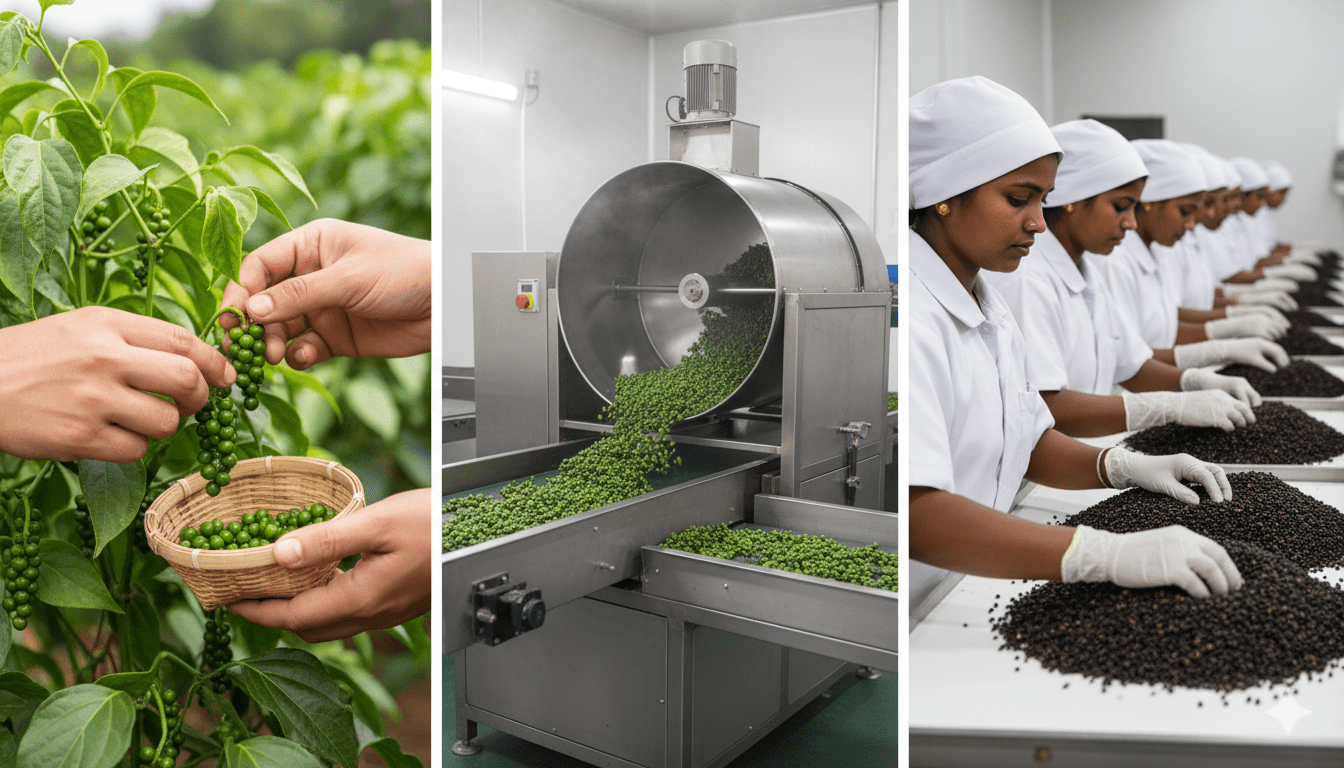
Given the heightened risk and scrutiny, a new model is emerging among reputable exporters: “Traceability & Trust” — a farm-to-fork supply-chain model. Key features:
- Clear documentation of origin (farm/estate), harvest date, processing methods, storage conditions.
- Avoidance of high-risk chemical fumigants like EtO — instead, using safer sterilization methods (steam, irradiation where permitted, controlled storage).
- Pre-shipment and batch-wise lab-testing (chemical residue, microbial load, authenticity), with CoA provided to buyers.
- Transparent packaging, hygienic processing, secure transport — reducing contamination risk post-processing.
- Willingness to share full supply-chain records, lab results, and certifications with importers, manufacturers, wholesalers to build trust and ensure compliance.
This model, while more resource-intensive, is aimed at buyers who prioritise quality, compliance, and reliability — especially in regulated markets such as Europe, North America, Australia.
What Global Buyers Should Do Due Diligence Checklist for Spice Import Deals
If you are an importer, manufacturer, or wholesaler sourcing spices (pepper, nutmeg, chili, mixed masalas) from India — these are the precautions to adopt:
- Demand full traceability: Ask for farm/estate origin, crop harvest – processing – storage – packing records.
- Refuse EtO-treated consignments: Insist on alternative sterilization methods or documented EtO-free processing.
- Require lab-test certificates (CoA): For chemical residues, microbial contamination, authenticity — for every batch.
- Audit your supplier’s facilities: Especially their processing, packaging, storage conditions, hygiene standards, and quality protocols.
- Favor suppliers committed to transparency: Who openly share documentation, lab reports, and invite audits — and treat quality and compliance as mutual priorities.
By doing so, you significantly reduce the risk of border rejections, recalls, legal liabilities, brand damage — and ensure long-term, stable supply for your business.
Why Responsible Suppliers Like Mira Masala LLP Are the Future of Spice Trade
At Mira Masala LLP, we recognize that the spice-trade landscape has changed. “Indian origin” alone is no longer a guarantee of safety or quality. That’s why we commit to:
- sourcing directly from verified farms or contract growers, reducing intermediaries.
- processing spices using safe sterilization or hygienic handling — not banned fumigants.
- performing batch-wise lab testing (residue, microbial, purity) through accredited labs.
- providing full supply-chain documentation, certificate of analysis, and traceability reports to our B2B clients.
- ensuring transparent, ethical, high-hygiene handling, storage and packaging.
For importers, manufacturers and wholesalers targeting sensitive and regulated markets — such an approach isn’t optional. It’s a necessity.
By partnering with reputable, transparent suppliers, you safeguard not just your shipment — but your brand reputation, regulatory compliance, and consumer trust.
Conclusion
The EtO-contamination crisis has exposed a harsh reality: in 2025, spices from India — once synonymous with quality — will no longer be judged solely by origin or aroma. Instead, global buyers demand proof: traceability, testing, transparency, and ethical processing.
The risk is real — for consumer health, for legal compliance, for business reputation. But so is the opportunity: suppliers who raise the bar, embrace best practices, and prioritize “farm-to-fork trust” will emerge as the reliable partners in a reshaped global market.
If you plan to import spices now — treat due diligence, testing, and traceability as business imperatives. Because in the world of spice trade, transparency isn’t just good practice — it’s survival.