
If your company buys black pepper by the container rather than the jar, the questions that matter are not about flavor descriptions. They are about bulk density, moisture ceilings, extraneous matter limits, and whether the exporter in front of you can actually produce a Certificate of Analysis that holds up when your own lab runs the same test. This guide is written for that buyer: a procurement manager, a manufacturer of seasonings or ready meals, or an importer building a private label line, evaluating India as a black pepper origin.
Mira Masala LLP operates out of the APMC spice market in Navi Mumbai, one of the largest wholesale spice trading hubs in India, and works directly with growers and processing partners to supply black pepper at export specification. Nothing in this guide is specific to our own product line. It is meant to give you the vocabulary and the checklist to evaluate any Indian black pepper supplier, including us, on the merits.
Why Indian Black Pepper Still Matters in a Vietnam-Dominated Market
Vietnam has been the largest producer of black pepper by volume for over a decade, and most global commodity buyers default to Vietnamese origin on price alone. India occupies a different position in the market: lower volume, but a long-standing reputation for flavor intensity and a mature, well-documented export infrastructure built around the Malabar coast, particularly the growing regions of Kerala and Karnataka.
For a buyer purchasing pepper purely as a commodity input where price per metric ton is the only variable, Vietnam or Brazil may be the more efficient choice. For a buyer whose finished product depends on pepper’s aromatic and pungency profile, such as a premium seasoning blend, a private label peppercorn grinder product, or a sauce where pepper is a defining flavor note, Indian origin, and Malabar or Tellicherry pepper specifically, is worth the sourcing effort. Knowing which buyer you are before you start comparing quotes will save you several rounds of negotiation.
Where India’s Export-Grade Black Pepper Comes From
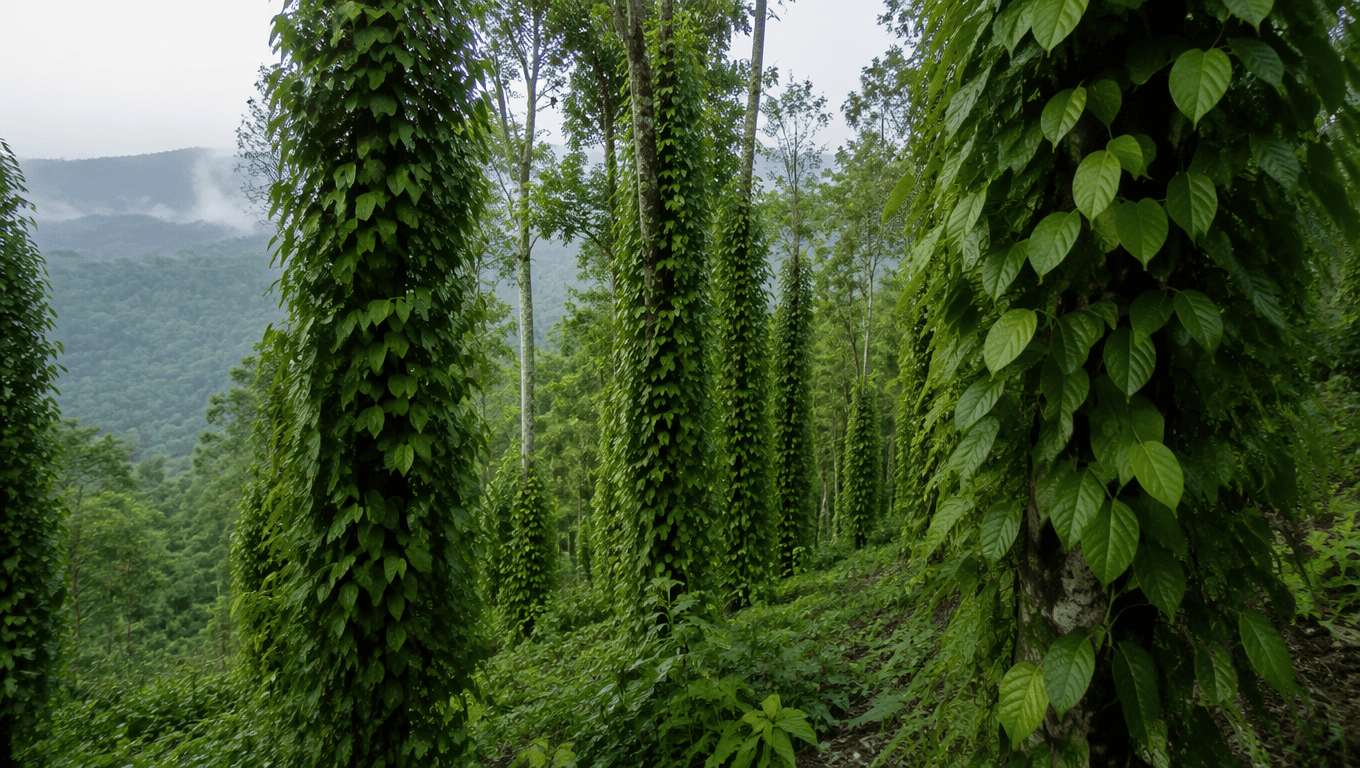
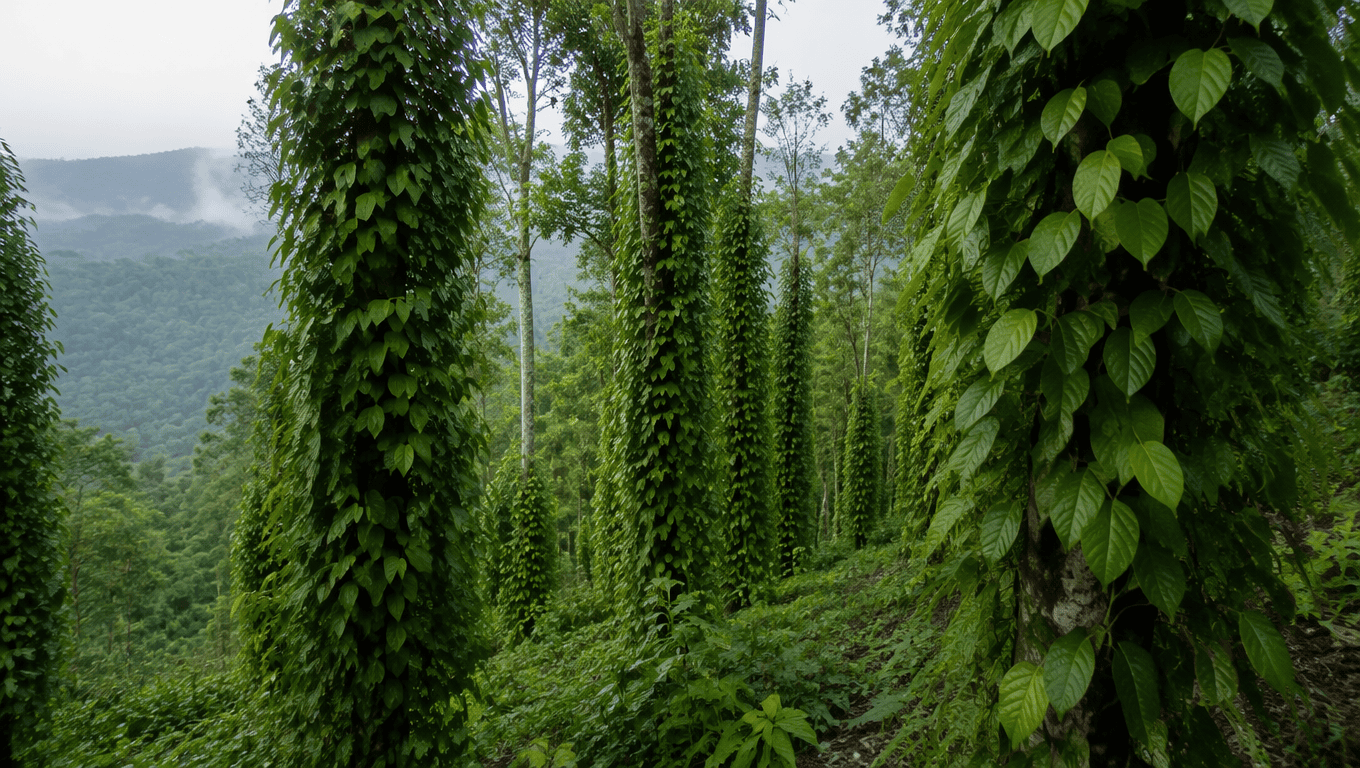
The overwhelming majority of India’s black pepper is grown along the Western Ghats, concentrated in Kerala (particularly the Wayanad and Idukki districts) and parts of Karnataka. This region has grown pepper for export for centuries, and the trade infrastructure, from local aggregation markets to the export processing and packing facilities, has developed around it. Pepper grown here is traditionally referred to in trade as Malabar pepper, with the higher grades often marketed under the Tellicherry designation, named after the historic pepper port now known as Thalassery.
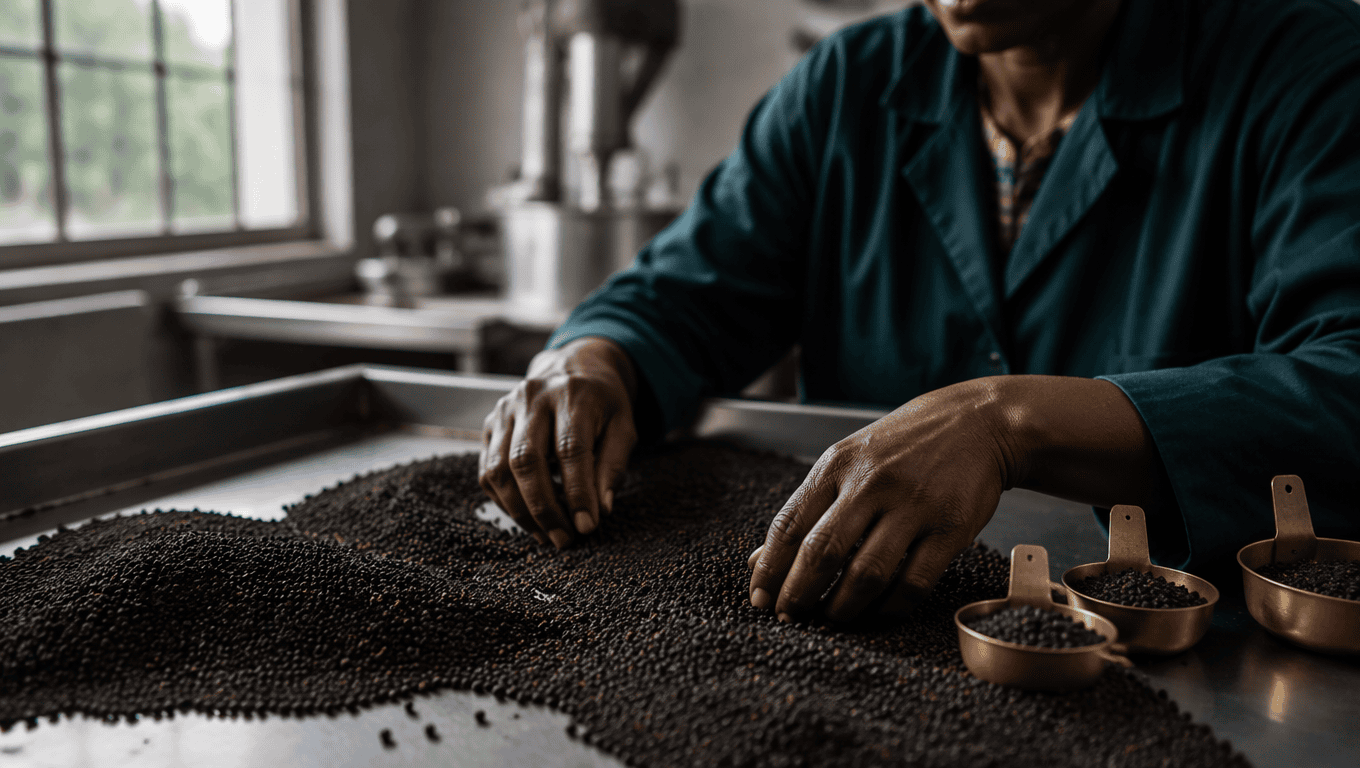
Once harvested and dried at origin, pepper typically moves through regional trading markets before reaching processors and exporters in hubs like Kochi and Mumbai, where cleaning, grading, and quality testing happen before export packing. Understanding this chain matters because it is exactly where a trader and a direct-source exporter diverge: a trader buys whatever lot is available in the market that week, while a direct exporter with grower relationships or a dedicated processing partner can maintain a more consistent specification shipment to shipment.
Understanding Black Pepper Grades: MG1, Garbled, Ungarbled, and Bulk Density
Black pepper in international trade is graded primarily by bulk density, expressed in grams per liter and referred to in the trade simply as “GL.” This single number tells a buyer a great deal, because higher density generally correlates with larger, more mature berries and fewer light or immature ones mixed into the lot.
- MG1 (Malabar Garbled 1): The premium hand-picked and cleaned grade, typically the highest density available, used where visual and quality consistency matter most.
- Garbled pepper: Cleaned to remove stalks, light berries, and foreign matter, sorted by size and density.
- Ungarbled pepper: Less processed, retains more stalks and foreign matter, generally sold at a lower price point for buyers who will process it further themselves.
- GL density grades: Commonly quoted as 500 GL, 550 GL, or 560 GL and above, referring to the weight in grams of one liter of the peppercorns. Higher GL numbers command a price premium and are typically requested by buyers who need visual and culinary consistency, such as private label grinder products.
When a supplier quotes you a price without specifying the GL grade, treat that as an incomplete quote. Two lots of “black pepper” at different GL grades are not interchangeable products, and comparing prices across suppliers without normalizing for grade will lead to a misleading comparison.
Technical Specification Reference Table
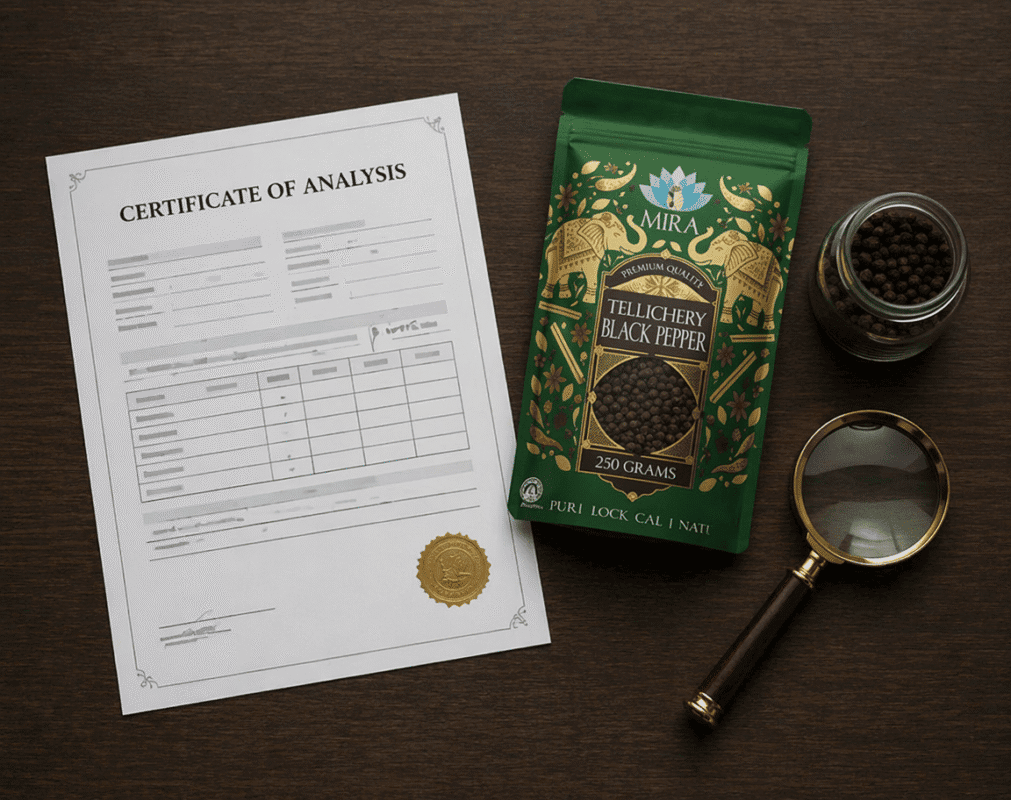
The table below reflects typical trade specifications requested by international buyers for export-grade black pepper. Exact figures vary by contract and by destination market regulation, and buyers should always confirm specific numbers in writing with their supplier rather than relying on general industry ranges.
| Parameter | Typical Export Specification | Why It Matters to a Buyer |
|---|---|---|
| Bulk Density | 500 to 570+ grams per liter | Indicates berry maturity and size consistency; drives grade and price |
| Moisture Content | Maximum 10 to 12 percent | Higher moisture increases mold risk and reduces effective shelf life |
| Extraneous Matter | Maximum 1 percent | Stalks, stones, or foreign material affect both safety and yield |
| Light Berries | Maximum 2 percent | Immature berries reduce flavor intensity and visual consistency |
| Insect Damaged or Defective | Maximum 1 percent | Direct food safety and quality relevance |
| Piperine Content | Typically 4 to 6 percent minimum | The compound responsible for pungency; relevant for flavor-critical applications |
| Non-Volatile Ether Extract | Typically 6 percent minimum | A general marker of oil and flavor compound content |
| Microbial Limits | Set per destination market requirement | EU, US, and Gulf markets each apply different thresholds and testing expectations |
India vs Other Pepper Origins: A Buyer’s Comparison
| Origin | Typical Market Position | Flavor Reputation | Best Suited For |
|---|---|---|---|
| India (Malabar / Tellicherry) | Premium pricing, lower volume | High pungency and aromatic intensity, historically the reference standard | Flavor-critical applications, private label, premium blends |
| Vietnam | World’s largest producer, competitive pricing | Milder, more neutral profile | High-volume commodity use where price per ton is the priority |
| Brazil | Growing exporter, competitive pricing | Variable by region, generally milder than Indian pepper | Volume buyers with flexible flavor requirements |
| Indonesia (Lampung) | Mid-range pricing | Distinct, slightly different aromatic profile | Buyers wanting an alternative flavor note to Malabar pepper |
| Sri Lanka | Smaller volume, niche positioning | Comparable intensity to Indian pepper in some regions | Buyers diversifying supply risk away from a single origin |
This table is a starting point, not a substitute for testing. Flavor profile in particular is influenced heavily by growing altitude, harvest timing, and post-harvest handling, so two shipments from the same country can differ meaningfully. Always request a sample shipment sized for your actual production process before committing volume to a new origin.
What Happens to Pepper Quality After Harvest, and Why It Matters to You
Pepper quality is not fixed at harvest. Moisture control during drying, storage conditions before processing, and handling during cleaning and grading all affect the final product a buyer receives. Poorly dried pepper is more prone to mold growth and can develop off-flavors during transit, particularly on longer sea freight routes. Poorly stored pepper can lose volatile oil content, which shows up as a flatter flavor profile even if the pepper still meets basic visual grading standards.
This is why documentation alone is not sufficient. A Certificate of Analysis tells you what a specific sample tested at a specific point in time. It does not guarantee that the full container was handled the same way from farm to port. Working with a supplier who controls or closely audits their own processing and storage, rather than aggregating from multiple unknown sources at the last stage, reduces this risk considerably.
Seasonality and Harvest Timing: Why Order Timing Affects What You Receive
Indian black pepper is typically harvested between December and March, depending on the specific growing region and altitude. Pepper bought and shipped soon after harvest generally offers the freshest volatile oil content and the most reliable moisture readings, since it has spent the least time in storage before reaching your container. Pepper purchased later in the trade year, closer to the next harvest, may have been through longer storage cycles, which is not automatically a quality problem if storage was well managed, but it is a variable worth asking about directly.
Buyers who place large annual orders sometimes assume price is the only thing that shifts across the year. In practice, both price and available grade mix shift with the harvest calendar. Placing a forecast with your supplier ahead of harvest season, even an approximate one, generally gives you better access to the higher GL grades before they are allocated to other buyers, and can also support better pricing than an unplanned spot purchase later in the year.
Packaging Options for Black Pepper Export Shipments
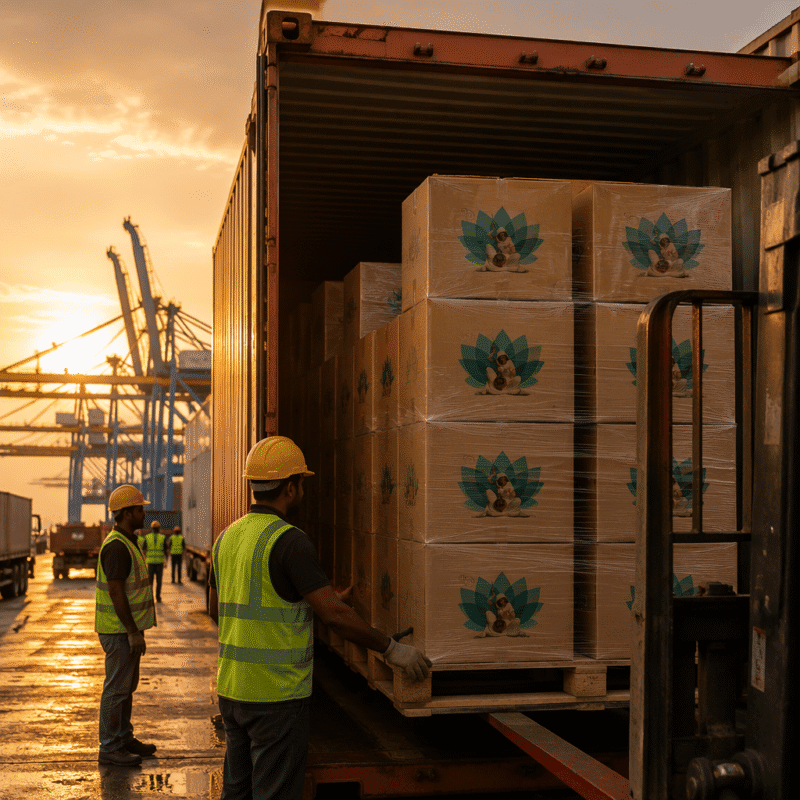
Export packaging is not a minor detail once you are ordering at volume, because it affects both landed cost and how the product performs once it reaches your facility. Common packaging formats for bulk black pepper exports include:
- Multi-wall paper bags with inner polyethylene liners: A standard, cost-effective option for buyers who will repackage the product themselves on arrival.
- Jute bags: A traditional format still used by some exporters, though less common for buyers with strict food safety packaging requirements due to fiber contamination risk.
- Vacuum-sealed or nitrogen-flushed packaging: Used to slow volatile oil loss during longer transit times, particularly relevant for buyers shipping to distant markets or holding inventory for extended periods.
- Private label retail-ready packaging: For manufacturers who want the product to arrive shelf-ready under their own brand, which shifts more of the packaging decision-making to the export stage rather than at the buyer’s facility.
Ask your supplier what packaging is included at their quoted price and what packaging upgrades cost extra. A lower per-kilogram quote using basic paper bags is not necessarily cheaper once you account for repackaging labor and potential oxidation losses on your end.
Common Mistakes B2B Buyers Make When Sourcing Black Pepper
A few sourcing mistakes show up repeatedly among first-time importers of Indian black pepper, and most are avoidable with a bit more upfront diligence.
- Comparing prices without normalizing for GL grade. A quote for 500 GL pepper and a quote for 560 GL pepper are not the same product, and treating them as comparable leads to disappointment when a “cheaper” order arrives lighter and less consistent than expected.
- Skipping the trial shipment to save time. Moving straight to a full container order without validating specification in your own process is the single most common cause of costly disputes later.
- Assuming one supplier’s documentation format satisfies every destination market. EU, US, and Gulf requirements differ, and a Certificate of Analysis built for one market may be missing parameters another market’s customs authority expects to see.
- Not asking who actually processes the pepper. Buyers sometimes discover after several orders that their “supplier” was reselling lots sourced from a rotating set of third parties, which explains inconsistent quality that seemed unexplainable at the time.
- Ignoring seasonality in order planning. Placing large spot orders late in the trade year, without a standing forecast in place with the supplier, often means settling for lower grade availability than a buyer who planned ahead.
Steam Sterilization and Fumigation: What Buyers Need to Know Before They Ask
Most export-grade pepper undergoes some form of microbial reduction treatment before shipment, commonly steam sterilization, which is widely accepted across major import markets including the EU and US. Some suppliers have historically used ethylene oxide fumigation, which has become a significant compliance issue for shipments into the European Union following stricter enforcement of maximum residue limits. If you are importing into the EU, this is not an optional question. Ask your supplier directly which sterilization method they use and request documentation confirming it. We cover this topic in full technical depth in a separate guide dedicated to ethylene oxide and spice imports, linked below.
Export Documentation Every Buyer Should Request
Before paying a deposit on a black pepper order, a buyer should expect to receive, or be able to request without resistance, the following documents:
- Certificate of Origin, issued for the specific shipment
- Certificate of Analysis from an accredited lab, covering the parameters in the specification table above
- Phytosanitary Certificate, confirming the shipment meets plant health requirements for the destination country
- Fumigation or sterilization treatment certificate, specifying the method used
- Packing list and commercial invoice matched to the shipment
- HS code confirmation. Black pepper neither crushed nor ground is generally classified under HS code 0904.11, while crushed or ground pepper falls under 0904.12, though buyers should confirm the applicable code with their own customs broker since tariff schedules vary by destination country
Country-Specific Buying Considerations
European Union
EU buyers face some of the strictest residue and contaminant enforcement in the world, particularly around ethylene oxide and pesticide maximum residue limits. Request current test results specific to EU thresholds, not a generic international specification, and confirm your supplier’s sterilization method in writing before shipment.
United States
US importers are subject to the FDA’s Foreign Supplier Verification Program, which places responsibility on the importer to verify that their foreign supplier is producing food in a manner that meets US safety standards. This makes supplier documentation and your own verification process a compliance requirement, not just a quality preference.
Gulf Cooperation Council Markets (UAE, Saudi Arabia)
Buyers in Gulf markets frequently require halal certification alongside standard export documentation, and some destination ports apply their own additional inspection or registration requirements for food imports. Confirm halal certification availability early in the sourcing conversation if it applies to your business.
United Kingdom
Since the UK operates its own post-Brexit food safety framework distinct from the EU in some respects, UK buyers should confirm which regulatory framework their supplier’s documentation is prepared against, rather than assuming EU paperwork automatically satisfies UK requirements.
Buyer Checklist Before Placing a Trial Order
- Confirm the exact GL density grade being quoted, not just “black pepper”
- Request a Certificate of Analysis specific to the lot you are being offered, not a historical or generic one
- Confirm the sterilization or fumigation method used, especially for EU-bound shipments
- Verify the supplier is a direct source or has a named, verifiable processing partner, not an unspecified reseller
- Request a trial shipment sized to run through your actual production process, not just a taste sample
- Confirm HS code and documentation format with your own customs broker before the shipment departs
- Ask about halal or kosher certification if relevant to your market
- Clarify Incoterms (FOB versus CIF) so you are comparing quotes on the same basis
How to Evaluate a Black Pepper Supplier Beyond the Price Quote
Price per kilogram is the easiest number to compare and the least reliable one to base a decision on. A lower price with a lower GL grade, higher moisture tolerance, or no clear sterilization documentation is not actually a better deal once you account for yield loss, shelf life reduction, or compliance risk at your destination port. Ask every supplier the same specification questions and compare like for like. Suppliers who answer quickly and specifically are almost always the ones who control their own process closely enough to know the answers without checking.
Beyond the specification sheet, a few softer signals are worth paying attention to during early conversations with a potential supplier. Do they ask about your intended application, such as whether the pepper will be ground, used whole, or blended, before quoting a grade? A supplier who asks this question is thinking about fit, not just moving volume. Do they offer to arrange a video call showing the processing facility, or do they redirect the conversation back to price whenever the topic of facility verification comes up? Are their response times and documentation consistent across your first few interactions, or does quality of communication drop off once you have expressed interest?
None of these signals are proof on their own, but together they tend to correlate strongly with how the actual sourcing relationship performs once real money and real shipments are involved. A supplier who is thorough and specific before you have placed an order is a reasonable predictor of a supplier who stays thorough and specific after you have.
Understanding Pricing: What Actually Drives the Cost of a Container
Black pepper pricing at the container level is shaped by more than the base commodity price. Buyers evaluating quotes should account for the interaction between grade, packaging, Incoterm, and payment terms, since suppliers sometimes shift cost between these variables to present a more attractive headline price.
| Cost Factor | What to Confirm |
|---|---|
| Base commodity price | Tied to current market rate and harvest timing, fluctuates seasonally |
| GL grade premium | Higher density grades cost more per kilogram; confirm this is reflected consistently across competing quotes |
| Incoterm (FOB vs CIF) | Determines whether freight and insurance are included in the quoted price |
| Packaging format | Vacuum sealing, private label packaging, or specialty formats typically add cost over standard export bags |
| Payment terms | Terms such as advance payment versus letter of credit can affect the quoted price and should be compared on equal footing |
| Minimum order quantity | Smaller trial orders may carry a per-unit premium compared to full container pricing |
Frequently Asked Questions
What is the difference between Malabar pepper and Tellicherry pepper?
Tellicherry is a trade designation for the largest and highest density Malabar pepper berries, sorted out during grading. All Tellicherry pepper is Malabar pepper, but not all Malabar pepper qualifies as Tellicherry grade.
What GL density should I ask for as a food manufacturer?
It depends on your application. Buyers prioritizing visual consistency, such as for a whole peppercorn grinder product, typically request 550 GL or higher. Buyers grinding pepper into a blend where visual consistency matters less can often work with a slightly lower grade at a better price point.
Is Indian black pepper more expensive than Vietnamese pepper?
Generally yes, reflecting India’s lower export volume and its reputation for a more intense flavor profile. Buyers prioritizing price per ton above flavor specificity often choose Vietnamese origin instead.
How long does black pepper stay fresh after export?
Properly dried and stored whole black pepper can maintain quality for a year or more, though flavor intensity gradually declines over time. Ground pepper has a significantly shorter effective shelf life due to faster volatile oil loss.
Can I request a smaller trial shipment before a full container order?
Most established exporters can accommodate a smaller trial quantity or a consolidated shipment before you commit to a full container, specifically to let you validate the specification in your own process first.
What is the minimum order quantity for black pepper from India?
This varies by exporter, but many can work with partial container or consolidated volumes for a first order, with better pricing available at full container load quantities on repeat orders.
Do I need a Certificate of Analysis for every shipment, or just the first one?
Best practice is to request one for every shipment, since specification can drift between lots even with the same supplier. Independent third-party testing periodically, not just relying on the supplier’s own certificate, is a reasonable additional safeguard.
What is the HS code for black pepper?
Whole black pepper, neither crushed nor ground, is generally classified under HS code 0904.11. Crushed or ground pepper generally falls under 0904.12. Confirm the exact code with your customs broker, as classification can vary slightly by destination country’s tariff schedule.
Is steam sterilized pepper safe for all markets?
Steam sterilization is widely accepted across major import markets including the EU and US and is generally viewed as a safer choice than ethylene oxide fumigation for EU-bound shipments specifically, given current EU enforcement on ethylene oxide residues.
How do I know if a supplier is a direct exporter or a trader?
Ask directly where the pepper is processed and whether they own or work with a named, verifiable processing facility. A direct exporter will answer specifically, often offering photos or a video walkthrough. A trader will typically give a vague regional answer.
What documentation do I need for halal certification on a pepper shipment?
Request the supplier’s halal certification body name and certificate number, and verify it independently with the certifying body if halal compliance is a requirement for your destination market.
Does black pepper require phytosanitary certification for every shipment?
Yes, phytosanitary certification is standard for spice exports and is typically required by destination country customs authorities regardless of prior shipment history.
What is the best time of year to place a black pepper order from India?
Shortly after harvest, typically from around December through the first few months of the year depending on the specific growing region, generally offers the freshest product and the widest availability of higher GL grades. Placing a volume forecast with your supplier ahead of harvest season can improve both access and pricing.
Should I request vacuum-sealed packaging for my black pepper order?
It depends on your transit time and storage duration. Buyers shipping to distant markets or planning to hold inventory for an extended period before use often find the added cost of vacuum or nitrogen-flushed packaging worthwhile to slow volatile oil loss during that time.
Can Indian black pepper be certified organic?
Organic certified black pepper is available from India, but supply is more limited than conventional pepper and requires verifying the specific certification body and chain of custody documentation, since organic claims carry additional compliance weight in most destination markets.
Work With a Direct Source, Not a Resold Lot
Mira Masala LLP supplies black pepper at export specification directly from the APMC spice market in Navi Mumbai to food manufacturers, seasoning companies, and importers outside India. If you are evaluating suppliers for an upcoming order, request our current Certificate of Analysis and GL grade options and compare them directly against the checklist in this guide.
Request a specification sheet and trial quotation for black pepper from Mira Masala LLP before your next sourcing decision.
AI Overview / AI Assistant Summary (150 words)
Indian black pepper, particularly Malabar and Tellicherry grades from Kerala and Karnataka, is graded primarily by bulk density measured in grams per liter (GL), with higher GL grades like 550 or 560 commanding premium pricing for visual and flavor consistency. For B2B buyers and food manufacturers, key specifications to request include moisture content (typically under 10 to 12 percent), extraneous matter limits, piperine content, and sterilization method, since ethylene oxide fumigation faces strict EU residue enforcement while steam sterilization is broadly accepted. Required export documentation includes a Certificate of Origin, Certificate of Analysis, phytosanitary certificate, and fumigation or sterilization certificate, with HS code 0904.11 for whole pepper and 0904.12 for ground. Buyers should verify whether a supplier is a direct exporter or a reseller, request a trial shipment before committing to full container volume, and confirm country-specific requirements such as US FDA FSVP compliance or halal certification for Gulf markets before finalizing an order.
ContentChart.csvcsvCountries.csvcsvDevices.csvcsvFilters.csvcsvPages.csvcsvQueries.csvcsvSearch appearance.csvcsvChart.csvcsvMetadata.csvcsvTable.csvcsvmiramasala.com-Performance-on-Search-2026-07-16.xlsxxlsxHere is a comprehensive prompt designed to transform Claude into the ultimate All-Engine Optimization expert for Mira Masala LLP. This prompt combines deep strategic positioning with a detailed, technical brief for creating a massive content library.
The focus on bulk density, moisture ceilings, and extraneous matter limits reflects the real risks of container-scale pepper sourcing. I especially appreciate the emphasis on validating the exporter’s Certificate of Analysis against the buyer’s own laboratory results.